Treasure Master
- 4.5
- Rating
- 10.00M
- Installs
- Free
- Price

 Analysis by App-foxy
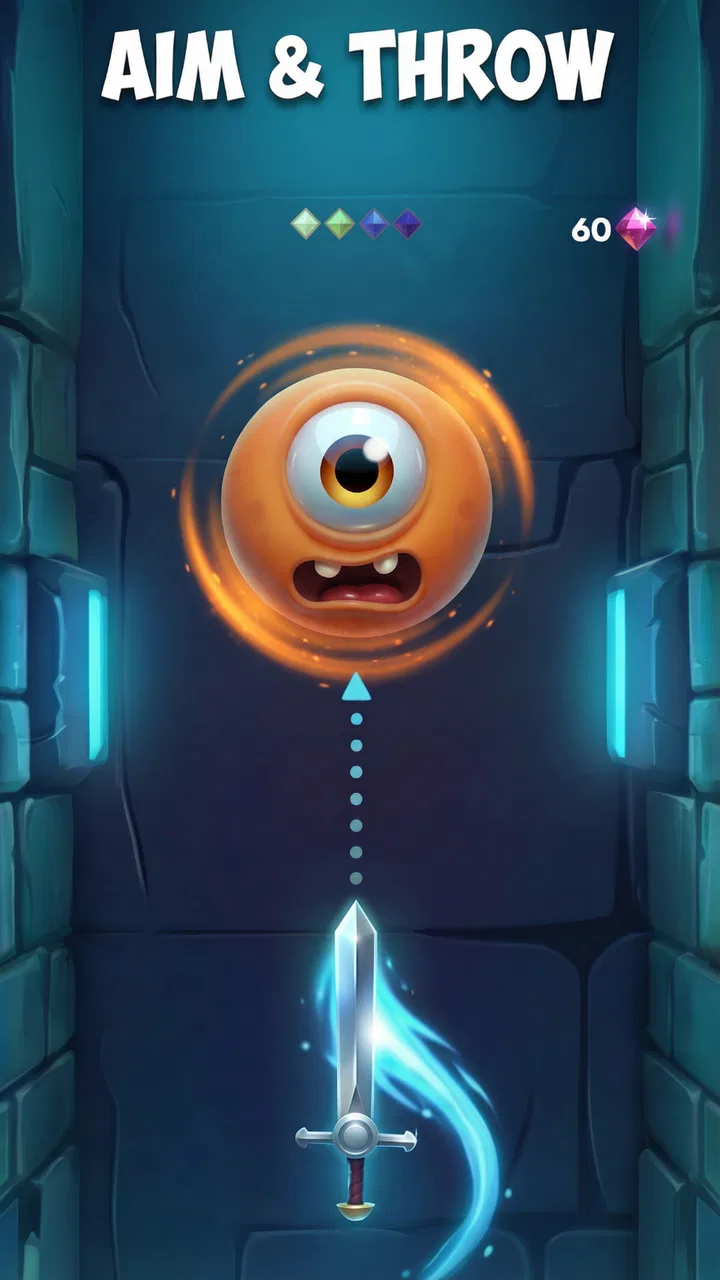
I found Treasure Master easy to understand within a few minutes, but not quite as shallow as its bright, pick-up-and-play presentation suggests. It is a casual arcade shooter from Gimica GmbH, built around moving through an endless treasure-hunting journey and taking on bosses along the way. The basic appeal is immediate: aim, shoot, collect progress, and keep pushing forward. What makes it worth a closer look is the way short sessions gradually become a test of timing, attention, and patience.
The game is free to install and suitable for Everyone, which makes it a natural choice for a quick break rather than a long, story-heavy adventure. It has reached over ten million installs and holds a 4.5 average from roughly 407 thousand ratings, so it clearly has broad appeal. Those figures do not automatically make it a perfect fit, though. In my experience, the best audience is someone who enjoys simple arcade loops, visible progress, and repeated attempts. If you want deep exploration, a complex narrative, or a competitive multiplayer experience, you will probably outgrow it quickly.
What the first few minutes really feel like
The opening experience is deliberately direct. You are not asked to learn a large collection of systems before playing. Instead, the game puts its central idea in front of you: survive the shooting action, work through the treasure hunt, and reach stronger encounters. That clarity is useful for first-time players because there is little uncertainty about what the immediate goal is.
You May Also Like

 Google Keep - Notes and lists
Google Keep’s Quiet Growth Shows the Appeal of Simpler Notes
As mobile work gets busier, Google Keep keeps winning a simple contest: capture a thought quickly, find it later, and get on with the day.

 Blood Strike: 2.5 Anniversary
Blood Strike’s Loadouts Turn Every Drop Into a Tactical Gamble
A close look at Blood Strike’s custom loadouts: how fast access to signature weapons reshapes its battle royale rhythm, rewards preparation, and narrows the gap between fights.

 Pandora - Music & Podcasts
Pandora’s Music Is Easy to Start, but Harder to Recover
Pandora’s strength is its low-effort path from a seed to a station. Its weak spot is how much confidence it asks you to place in connection, setup, and quiet recovery.

 8 Ball Pool
 Is Built on Rivalries, Rematches, and Routine
A close look at the rivalries, rematches, shared routines, and unanswered safety questions that turn a quick pool match into a persistent mobile community.

 Samsung Music
’s Quiet Strength Is Playing What You Already Own
Its reach comes less from spectacle than from dependable access to a personal library. That simplicity is both the app’s strongest retention engine and its ceiling.

 AccuWeather: Weather Radar
AccuWeather Review: A Quick, Clear Forecast for Everyday Decisions
For everyday plans, the best forecast is the one you can understand quickly. AccuWeather makes rain timing, radar, and local conditions easy to act on, with a few trade-offs.
More From Our News Desk



I would describe the rhythm as a chain of compact arcade challenges rather than a traditional adventure. The treasure theme gives the journey a sense of direction, while the boss encounters provide moments that feel more important than ordinary progress. The result is a game that works well when you have only a few minutes, especially during a commute, a waiting room visit, or a short pause between tasks.
The trade-off is that the simplicity can become repetitive. The pleasure comes from improving your response and making better decisions during another run, not from constantly discovering a new type of activity. That distinction matters. Treasure Master is strongest as a repeatable reflex game, not as a complete adventure replacement.
Its casual classification is accurate, but “casual” should not be confused with completely effortless. The early stages are approachable, yet boss sections can expose rushed movement or poor timing. I liked that the game gives the player a clear reason to stay focused without turning the first session into a demanding tutorial. You can begin casually and decide later whether you want to take the challenge more seriously.
Starting without overthinking the setup
The game runs on Android devices using Android 7.0 or later, and the current version is 1.8.0. Once installed, I recommend beginning with the default experience rather than immediately worrying about optimization or spending. The most useful first step is simply to learn how the shooting controls respond and how quickly danger develops on screen.
That sounds obvious, but it prevents a common mistake: treating every early action as if it must be perfect. The first meaningful goal should be understanding the relationship between aiming, firing, and movement. Watch how much attention is needed to keep your target in view, then notice whether you are reacting to threats too late. This small observation tells you more about your play style than rushing through the opening.
Because the game is free, it is easy to try without making a commitment. It does include optional in-app purchases, ranging from $0.99 to $15.99 per item. I would personally postpone any purchase until the basic loop has either become enjoyable or clearly failed to hold my attention. Buying something before knowing whether you like the repeated shooting-and-progress cycle is the wrong order.
For a child or younger player, the Everyone rating makes the game broadly accessible, but I would still explain that free games can offer optional purchases. The important practical habit is to treat the purchase layer as separate from the core test: first decide whether the action itself is fun, then decide whether any optional convenience is worth considering.
How to reach the first satisfying success
Your first satisfying success is not necessarily defeating the biggest boss. It is the moment when you stop reacting randomly and begin controlling the encounter. To get there, concentrate on one thing at a time. Keep your aim steady, avoid frantic corrections, and use the opening moments of an encounter to read its pace instead of firing without a plan.
I found that deliberate play is more useful than constant speed. When the screen becomes busy, beginners often focus only on the target and forget the surrounding danger. A better routine is to alternate attention: track the boss or immediate objective, then briefly check your position before returning to the shot. This does not require advanced knowledge; it is simply a way to prevent tunnel vision.
Another helpful habit is to treat failure as information. If you lose because you were too slow to respond, the next attempt should focus on earlier movement. If you lose because your attention was fixed on the boss, keep checking the wider play area. Repeating the same attempt with the same mistake is frustrating, while changing one behavior gives each retry a clear purpose.
This is where the game’s arcade design works well. A successful run feels earned through better timing rather than through a long explanation. The improvement may be small, such as surviving longer or handling a boss more calmly, but those small gains create the reason to play again. For a first-time user, that is the most reassuring path into the game: learn one response, apply it, and let progress build naturally.
Confusions that can make the game feel harder than it is
The first common confusion is assuming that shooting alone will carry every encounter. It will not. The game presents itself as a shooter, but the player’s attention and positioning matter just as much as pressing the attack. If you focus only on dealing damage, you may miss the reason a run is failing.
A second confusion is expecting the treasure theme to behave like a conventional treasure-hunting game. This is not an exploration title where the main pleasure comes from searching a large world at your own pace. The treasure idea frames the journey, while the actual play is centered on arcade shooting and boss battles. Knowing that before installing will help you set the right expectations.
Some players may also mistake repetition for a lack of progress. In this kind of game, replaying a familiar pattern is part of the design. The point is to become more consistent, not merely to see a new scene every time. That will appeal to people who enjoy refining a run, but it may frustrate anyone who needs constant novelty.
The free-to-play structure can create another point of hesitation. Optional purchases may look tempting when progress becomes more demanding, but I would first try changing your approach. Slow down, identify the specific mistake, and attempt the section again. If the experience remains enjoyable without spending, you have a clearer basis for deciding whether an optional item adds genuine value rather than simply relieving impatience.
There is also a practical difference between playing for relaxation and playing for mastery. During a short break, I can accept a quick attempt and move on. When I am trying to beat a boss, however, careless play becomes much more noticeable. The same game can therefore feel pleasantly light or unexpectedly demanding depending on the mood and the goal I bring to it.
Using it in an ordinary day
Imagine having ten minutes before an appointment. A large role-playing game would be inconvenient because you might need to remember a story, manage equipment, or reach a safe stopping point. Treasure Master fits that gap better. You can start quickly, focus on a compact arcade objective, and stop after an attempt without needing to invest an entire evening.
It is also a reasonable choice for someone who wants a game that can be understood by several age groups. The controls and goal are easier to explain than the systems in strategy or simulation games. A parent could introduce it to a child as a simple shooting challenge, while an adult could use it as a brief reaction-based distraction. The Everyone rating supports that broad accessibility, although supervision around optional purchases remains sensible.
On the other hand, I would skip it if you want a calm game with no pressure. Even a casual shooter can demand quick reactions when bosses appear. I would also choose another category if your priority is building, collecting through detailed management, or following a substantial storyline. The treasure setting may suggest those possibilities, but the actual attraction is the action loop.
Where it stands beside other casual choices
Compared with a match-three puzzle game, this title asks more from your attention in the moment. You are not mainly planning combinations several moves ahead; you are responding to an active encounter. Compared with an endless runner, it places more emphasis on attacking targets and handling bosses rather than simply avoiding obstacles. Those differences make it a better fit for players who want a little more direct control.
Against larger action games, its advantage is accessibility. You do not need to commit to a long campaign before discovering whether the core mechanics suit you. The disadvantage is depth. A more ambitious shooter may offer richer progression, broader environments, or more varied combat systems. Treasure Master instead concentrates on a narrower idea and relies on repetition to keep that idea engaging.
I also see a meaningful difference from idle or mostly automatic games. Here, your attention still matters during the encounter. That makes a successful attempt feel more personal, but it also means the game is less suitable when you want something to run in the background. The right comparison is not “which game has more content?” but “how much active involvement do I want during a short session?”
What to do after the first win
Once you have completed an early successful action, do not immediately chase every available improvement. Instead, decide what kind of player you are becoming. If you enjoy clean, careful runs, focus on consistency and learn the timing of boss encounters. If you prefer a relaxed experience, keep sessions short and stop before repetition turns into irritation.
A useful personal rule is to make each retry answer one question. Was I aiming too late? Did I ignore my position? Did I rush because the boss looked close to defeat? This turns the game from a string of vague failures into a small practice routine. It is one of the less obvious strengths of the format: even with a simple premise, it can reward disciplined attention.
I would also keep spending decisions separate from skill decisions. If you are losing because you do not yet understand the encounter, an optional purchase may hide the real problem rather than solve it. Play enough to know whether the game’s challenge is enjoyable. Only then consider whether an item priced within the available purchase range adds something you actually want.
My recommendation after spending time with it
Treasure Master is an easy recommendation for players who want a free casual arcade shooter with a clear treasure-hunt theme, quick sessions, and boss-focused milestones. Gimica GmbH keeps the entry point approachable, and the broad install base suggests that the format has found a substantial audience. I especially like it for short breaks because it does not demand the commitment of a larger adventure.
My praise comes with a clear condition: you need to enjoy repetition and gradual improvement. The game is not trying to replace a console-style campaign, a deep strategy title, or a social multiplayer game. Its value comes from making a straightforward action loop satisfying enough to revisit. When I approach it that way, the simplicity feels focused rather than empty.
The free download lowers the risk of trying it, while the Everyone rating makes it accessible to a wide audience. Just remember that optional purchases are present, and decide on their value only after you understand your own enjoyment of the core play. If you want a quick shooter where your first real victory comes from paying closer attention, this is worth a try; if you need constant novelty or a richer adventure, choose a different kind of game.
FAQs for Treasure Master
01What is the main objective of Treasure Master?
Treasure Master is an adventure game where players embark on exciting quests to discover hidden treasures across various exotic locations. The main objective is to solve puzzles and complete challenges to unlock new levels and earn rewards. With its engaging storyline and stunning graphics, players are immersed in a world full of mystery and excitement.
02Is Treasure Master free to play?
Yes, Treasure Master is free to download and play. However, it offers in-app purchases for players who wish to enhance their gaming experience. These purchases might include additional tools, extra lives, or special abilities that can help advance through levels more easily. Players can enjoy the game fully without making purchases, but these options are available for convenience.
03What are the device requirements to run Treasure Master?
Treasure Master is compatible with both Android and iOS devices. For Android users, the game requires Android 5.0 or higher, while iOS users need iOS 11.0 or later. It is optimized for both smartphones and tablets, ensuring a smooth gaming experience across different devices. Adequate storage space is also recommended to accommodate updates and new content.
04Does Treasure Master require an internet connection to play?
Treasure Master can be played offline, allowing users to enjoy the game without an active internet connection. However, certain features like multiplayer modes, leaderboards, and in-game purchases require an internet connection. For the best experience, an intermittent connection is recommended to access all features and updates.
05Is Treasure Master suitable for children?
Treasure Master is designed to be suitable for players of all ages, including children. The game features colorful graphics and easy-to-understand mechanics that make it accessible to younger audiences. However, parents should be aware of in-app purchases and supervise their children to prevent unintended transactions. The game encourages problem-solving and critical thinking, making it both educational and entertaining for kids.
Pros
- Engaging treasure-hunting gameplay.
- Vibrant and detailed graphics.
- Regular updates with new levels.
- Intuitive controls for easy play.
- Competitive leaderboards enhance replayability.
Cons
- In-app purchases can be pricey.
- Occasional ad interruptions.
- Requires a stable internet connection.
- Limited offline features.
- Battery consumption can be high.

Treasure Master
Gallery